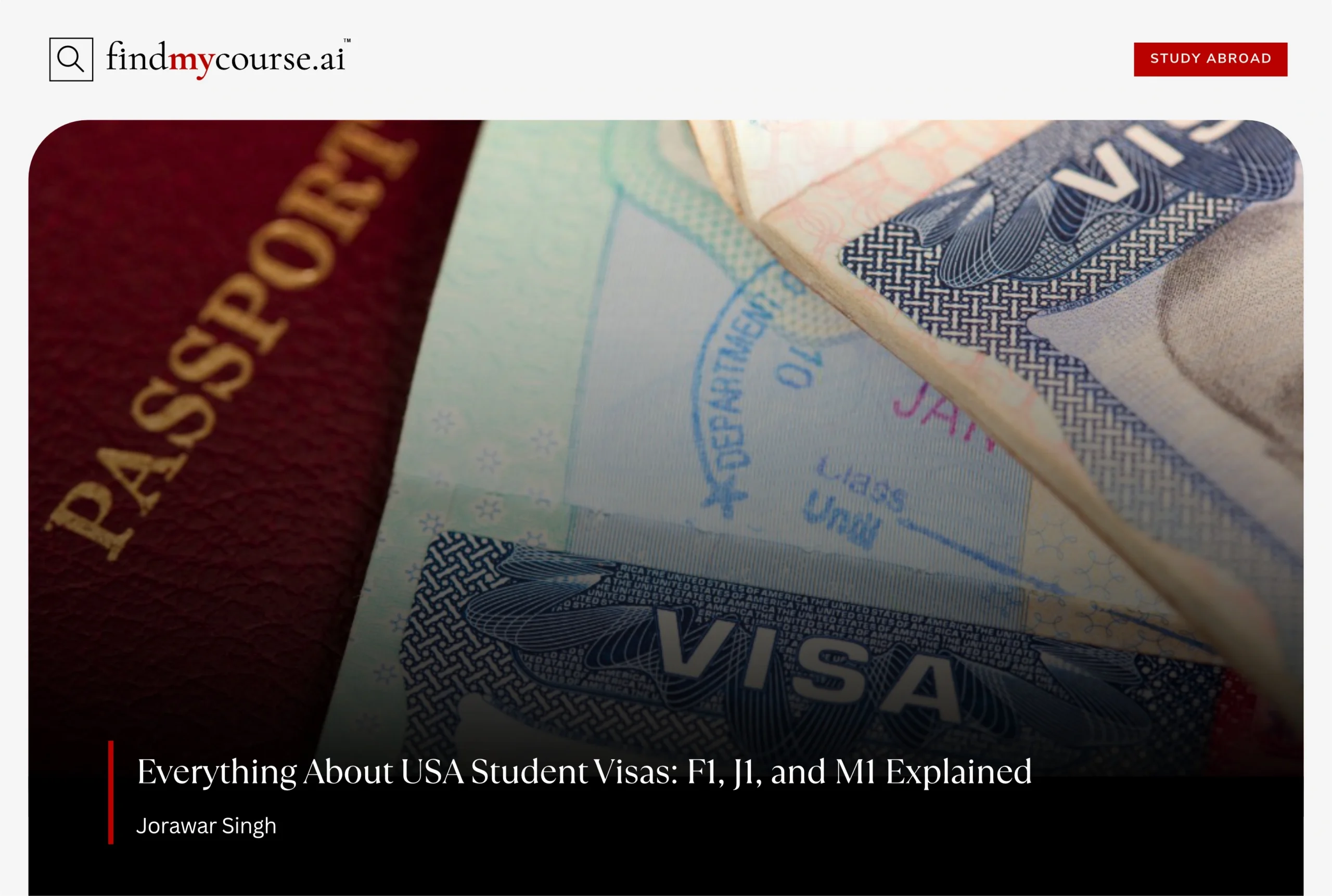
If you’re planning to study in the USA, having the correct visa is essential. This comprehensive USA Student Visa Guide covers everything you need to know, including the different types of student visas, step-by-step application procedures, and important tips to avoid common mistakes. Whether you’re just starting your study abroad journey or preparing your documents, this guide is your go-to resource. Make sure to bookmark or save it—you’ll need it throughout your application process!
Explained: What Is the USA Student Visa?
The USA Student Visa is an official document that allows non-U.S. nationals to legally enter and reside in the United States for the purpose of full-time study at an approved educational institution. Whether you’re enrolling in a university, language school, or technical training program, you’ll need the correct visa to match your academic goals.
There are three main types of student visas in the USA, each designed for a specific kind of study experience:
- F1 Visa – The most common type, intended for students enrolled in academic programs at universities, colleges, high schools, or English language institutes.
- J1 Visa – Issued for students participating in exchange programs, including short-term study, internships, or research-based initiatives.
- M1 Visa – Designed for students enrolled in non-academic programs, such as vocational training or technical courses.
Understanding which visa suits your educational path is crucial before applying, as each type has its own eligibility rules, duration limits, and post-study options.
Indian Students and Other Internationals F1 Visa
What Is an F1 Visa?
In particular, an F1 visa is the most sought-after student visa for foreigners enrolling in academic courses. It is appropriate for students who want to pursue degrees such as Bachelor’s, Master’s, and Doctorate.
Eligibility Conditions
- Admission with a SEVP-approved U.S. institution
- Full-time enrollment in an academic program
- Must demonstrate English proficiency OR be enrolled in a program that teaches English
- Have sufficient financial resources.
- Have strong ties to the home country
Steps for Applying
- Receive Form I-20 issued by your SEVP-approved university after admission
- Pay the SEVIS I-901 fee (some short-term J-1 categories may be exempt)
- Fill out the DS-160 form.
- Schedule an interview appointment at the USA embassy.
- Consulate for the Visa interview in your embassy.
Required Documents
- Valid Passport
- Form I-20
- DS-160 confirmation page
- Proof of SEVIS payment
- Academic transcripts
- Financial Evidence (From Bank, Scholarship, Etc.)
Benefits of F1 Visa
- Eligible for OPT, or Optional Practical Training after graduation
- On-campus employment limited to up to 20 hours per week during academic sessions
- Traveling to the USA is permitted.
Requirements for J1: The Exchange Visitor Visa
What Is a J1 Visa?
The J1 exchange visitor visa is for students, scholars, and professionals going on exchange programs such as internships, short-term training, or research. It is sponsored by educational or government parties. It is therefore ideal for individuals coming for a limited time under the auspices of a cultural exchange.
Common Programs Under J1
- University exchange students
- Research Scholars
- Internships and training programs
- Secondary school students
Application Process
- Receive the DS-2019 form from your program sponsor.
- Pay SEVIS fee
- Fill DS-160 form
- Schedule embassy appointment
- Attend an interview with documentation.
Required Documents
- Passport
- DS-2019 form
- DS-160 confirmation
- Sponsor letter
- Proof of financial ability
Special Conditions
- A two-year home residency requirement may apply (for specific funded categories)
- No dual intent; applicants must demonstrate intent to return to their home country after program completion
Processes for M1 Visa: Vocational and Technical Students
It is for international students who are attending a non-academic or vocational program, such as a culinary school, a mechanical workshop, or a technical institute. Unlike the F1 visa, M1 holders consequently have restrictive employment and program-change limits.
Eligibility Criteria
- Enroll in a full-time, SEVP-approved vocational program.
- Proof of funds for the entire course duration
- Ties to your home country
Application Process
- Obtain Form I-20M-N from your school.
- Pay SEVIS fee
- Complete DS-160
- Schedule embassy interview
- Submit documents and attend an interview.
Work Restrictions
- No part-time or on-campus work.
- Practical training may be permitted after program completion, subject to DSO recommendation and USCIS approval, and is strictly time-limited
Key Differences Between F1, J1, and M1 Visas
| Feature | F1 Visa | J1 Visa | M1 Visa |
| Purpose | Academic study | Exchange/cultural programs | Vocational/technical training |
| Form Required | I-20 | DS-2019 | I-20M-N |
| Work Options | On-campus & OPT | if specifically authorized by the J-1 program sponsor | Limited post-study practical work |
| Dual Intent Allowed? | No | No | No |
| Dependents (F2/J2/M2) | Allowed | Allowed | Allowed |
Choosing the Right Visa Depending on Your Needs
Your choice of a USA Student Visa depends on your education goals, program duration, and career plans. For instance, here is a quick checklist:
- Use F1 for attending any degree program in any college or university.
- J1 is for any exchange or internship sponsored by the U.S. government or other agency.
- M1 is for any technical or vocational course.
- Always check with your academic advisors or program coordinators because they can effectively help you choose many things.
When to Start the Visa Process?
As of 2025, the U.S. government requires enhanced background and security screening for student visas. Applicants may be asked to provide social media identifiers and ensure their profiles are publicly accessible during visa processing. These checks may increase processing times and should be factored into application planning.
The Ideal Timeline:
- 6 months before: University application
- 4 months before: Receive I-20 or DS-2019
- 3 months before: Book visa appointment
- 1 to 2 months before: Interact, encounter the interview, get your USA student visa
Timelines may vary depending on embassy workload, interview availability, and administrative processing.
Typical Reasons for USA Student Visa Rejections for Students
It is a common situation that, for example, even after applying, students get rejected. Some of these reasons are:
- Lack of financial proof
- Varying answers in the interview
- Weak ties to home country (risk of overstaying)
- Incomplete documentation
- A suspicious academic record
- Failure to demonstrate clear study plans aligned with academic background
Therefore, be completely prepared, carry every one of the required documents, and be honest about what you are going to study, as well as your intention to return to your home country.
Summary: The USA Student Visa Guide
The USA Student Visa Guide discusses details on all the F1, J1, and M1 visa types. For instance, each visa has its specific uses, rules, and benefits depending on your educational route. Kick-start your career with the right choice of program, early gathering of documents, and ample preparation for the embassy interview.
Moreover, whether you are pursuing an advanced degree program, preparing for an exchange season, or training in new skills at a vocational school, your dream of studying in the US is well within your reach. Follow the procedure, stay organized, and if you have any doubts, just ask our Ai Assistant.