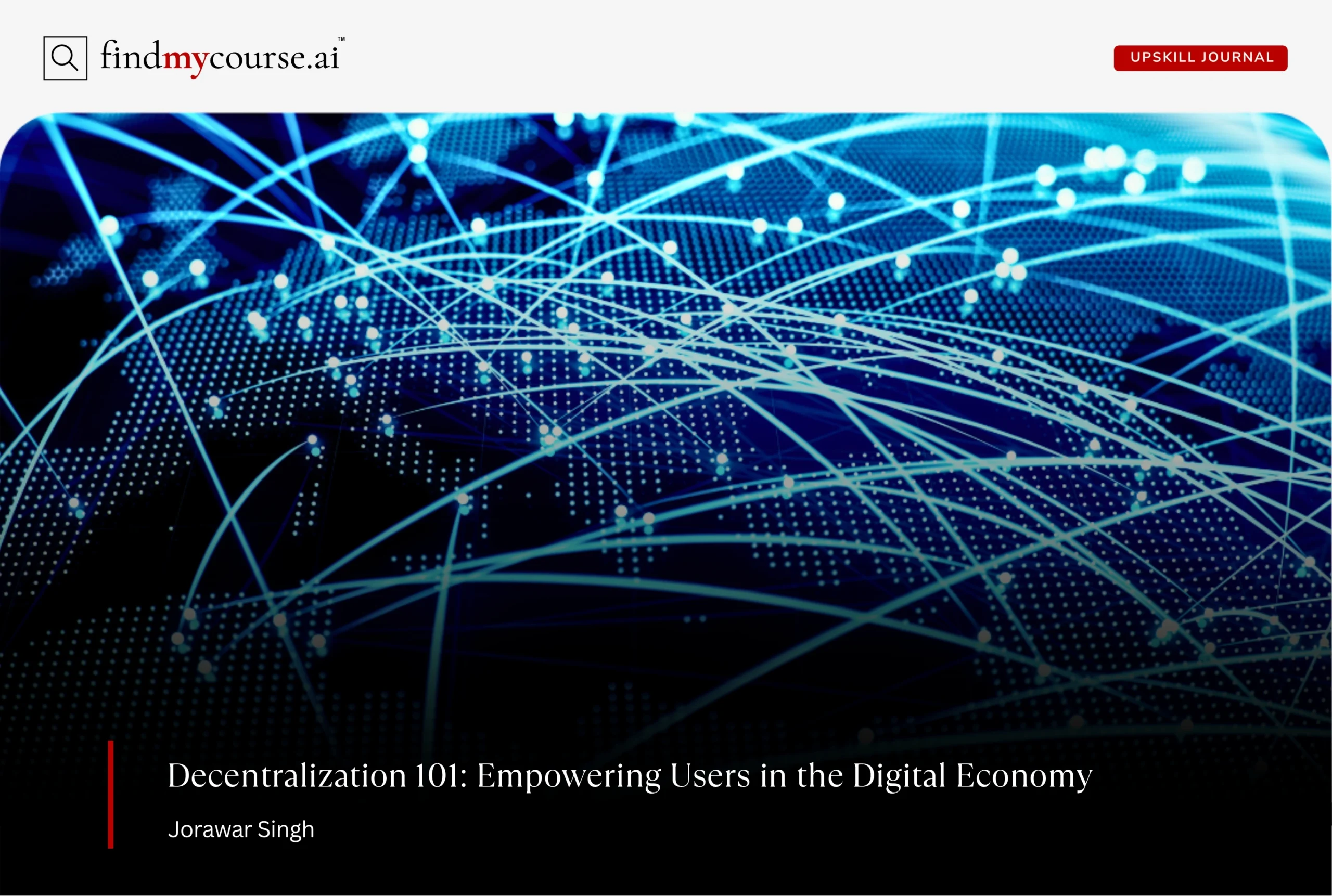
You’ve probably heard the term decentralization thrown around a lot lately, especially when talking about blockchain, AI, or Web3. But what does it actually mean? At its heart, it is about shifting control from a single authority to a wider network. It’s a concept that’s reshaping how we interact with technology, businesses, and even our own careers.
In today’s fast-moving digital world, understanding decentralization isn’t just for tech enthusiasts—it’s for anyone looking to upskill and stay relevant. From the apps we use to the jobs we pursue, this shift affects how we store data, verify transactions, and make decisions online. By the end of this article, you’ll see how it works, and how it could shape your career path in the years ahead.
What Is Decentralization?
Let’s start simple. Decentralization is essentially the opposite of centralization. In a centralized system, a single entity—like a bank, a cloud provider, or a social media platform—controls everything: data, rules, and access. You have to trust that authority to act fairly, securely, and efficiently.
Decentralization spreads that control across a network. Instead of one boss making all the decisions, every participant has a say—or at least, a role in validating actions. Think of it like a community library where everyone contributes books and helps organize them. There’s no single person deciding who gets to read what, making the system more resilient and inclusive.
In the digital age, it often relies on technology to enforce trust. Cryptography, consensus mechanisms, and peer-to-peer networks allow participants to interact safely without intermediaries. This shift is changing not only how systems operate but also how we think about ownership, identity, and learning in a connected world.
Benefits of Decentralization
Why should we care about decentralization? It offers several clear advantages:
- Resilience: Decentralized systems have no single point of failure. If one node or server goes down, the network continues to operate. This design makes platforms more reliable and resistant to outages, cyberattacks, or unexpected disruptions. For example, decentralized storage networks ensure your files remain accessible even if some servers fail.
- Transparency: In decentralized systems, actions, rules, and records are often publicly verifiable. This transparency builds trust because participants can independently confirm that processes are fair and secure. Blockchain-based transactions, for instance, can be traced and audited by anyone, reducing the need to blindly trust a central authority.
- Ownership: Users regain control over their data, digital assets, and identities. Unlike centralized systems where platforms dictate usage and access, decentralized systems empower individuals to decide how their information is shared, stored, or monetized. This autonomy is particularly valuable in learning, career credentials, and creative industries.
- Innovation and Inclusion: Open networks encourage participation from anyone, anywhere. This fosters collaboration, creativity, and new business models. Developers, creators, and professionals can experiment, contribute, and innovate without requiring permission from a central authority, making decentralized platforms hotbeds for experimentation and growth.
In addition, decentralized systems can align with modern career and learning paths. Professionals who understand these systems can leverage them to innovate, collaborate globally, and pursue upskilling opportunities in emerging technologies.
Centralized vs. Decentralized Systems
Understanding decentralization becomes easier when you compare it to its centralized counterpart.
| Feature | Centralized | Decentralized |
| Control | Managed by a single entity, such as a bank or platform, which makes all decisions | Distributed across multiple nodes or participants, so no single entity has full authority |
| Failure risk | High; if the central server or authority fails, the whole system can be disrupted | Low; even if some nodes fail, the system continues to operate |
| Trust | Users must rely on the authority to act fairly and securely | Built into protocols and consensus mechanisms, reducing the need to trust a single party |
| Transparency | Internal processes are often hidden, making verification difficult | Records and actions are visible and verifiable across the network |
| Data Ownership | The authority controls user data and decides how it is used | Users maintain control over their own data, often with encryption and selective sharing |
| Censorship | Possible at the discretion of the central authority | Hard to enforce; the distributed nature resists unilateral content removal or blocking |
| Examples | Banks, social media platforms, traditional cloud storage | Blockchain networks, peer-to-peer (P2P) systems, decentralized apps (dApps) |
How Decentralization Works in the Digital Age
By 2026, decentralization touches almost every layer of digital life. Here’s a closer look:
Infrastructure
Decentralized infrastructure spreads computing and storage across many nodes rather than relying on a single server. Peer-to-peer networks and distributed storage systems make platforms more resilient. If one node fails, the network keeps running. This approach also enhances security since hackers would need to compromise multiple nodes to succeed.
Trust and Verification
In traditional systems, trust is centralized—banks verify payments, social networks verify identities. Decentralized systems encode trust into the technology itself. Blockchain, for instance, allows users to verify transactions independently. Smart contracts automatically enforce rules without human intervention. This reduces reliance on intermediaries and builds confidence in the system.
Ownership and Identity
Decentralization also empowers individuals to control their digital assets and identities. Instead of relying on platforms to manage credentials, users can maintain their own identity, share it selectively, and even monetize digital creations directly. This shift gives more autonomy and privacy while opening new opportunities for career development and learning.
Governance
Decentralized governance distributes decision-making across participants. In Decentralized Autonomous Organizations (DAOs), members vote on proposals, protocol upgrades, and funding decisions. This model ensures transparency and inclusivity, though it can be slower to implement changes than traditional centralized structures. Nevertheless, it reflects a new way of collaborating and making decisions online.
Challenges and Limitations of Decentralization
While decentralization brings many benefits, it isn’t without its challenges. Understanding these limitations is crucial for anyone exploring decentralized technologies or planning to leverage them in careers, learning, or business:
- Scalability: Decentralized systems often require multiple nodes to validate transactions, which can slow processing compared to centralized systems. This can impact performance, especially for high-volume applications or real-time operations.
- Complexity: Interacting with decentralized platforms often involves managing cryptographic keys, understanding smart contracts, and navigating unfamiliar interfaces. For newcomers, this learning curve can feel intimidating and limit adoption.
- Governance Challenges: Distributed decision-making, such as voting in DAOs, can be slower and sometimes contentious. Aligning diverse stakeholder interests often requires negotiation and consensus, which can delay system updates or improvements.
- Security Responsibility: Users control their own credentials, meaning mistakes like losing keys or mismanaging access can lead to permanent loss of assets or data. Personal responsibility for security is critical.
Decentralization is a spectrum rather than a binary state. Systems can be partially decentralized, balancing efficiency and resilience depending on the context.
Real-World Applications
Decentralization isn’t just a concept—it’s transforming industries:
| Industry / Application | How Decentralization Is Applied | Example / Impact |
| Finance | Platforms operate without traditional banks, enabling peer-to-peer lending, borrowing, and investing | Decentralized Finance (DeFi) allows anyone to access financial services globally |
| Digital Identity | Users control their own credentials and identity, making verification portable and secure | Self-sovereign identity systems and blockchain-based certificates for learning or careers |
| Content Platforms | Users manage data, monetize content, and participate in governance | Decentralized social media or streaming platforms give creators more control and revenue opportunities |
| Supply Chains | Transactions are recorded on distributed ledgers to improve transparency and traceability | Enables tracking products from origin to delivery, enhancing accountability and trust |
| Overall Impact | Empowers individuals, fosters learning, and opens new career paths | Decentralization creates inclusive systems that redistribute control and opportunities |
These applications show how it is not just about technology—it’s about creating systems that empower people, foster learning, and open new career paths.
Conclusion
Decentralization is reshaping the digital landscape, giving individuals more control, transparency, and opportunities to innovate. It’s not just about technology—it’s about how we interact, collaborate, and create value in a connected world. From managing digital assets and identities to participating in decentralized governance, understanding these systems opens doors to new career paths and learning opportunities.
Embracing decentralization means stepping into a future where systems are more resilient, inclusive, and participatory. By staying informed in this space, you can confidently navigate and contribute to the decentralized digital economy of tomorrow.