The digital age has fundamentally changed how we communicate with the brands we love—and the ones we don’t. A decade ago, if you had a bad experience at a restaurant, you might tell a few friends. Today, you post a reel, tweet a complaint, or leave a detailed review on a third-party app. For businesses, this massive influx of raw data is both a goldmine and a challenge. How can a global corporation possibly read and understand millions of comments across 20 different languages every day? The answer lies in sentiment analysis.
In 2026, brands that fail to understand customer sentiment in real time often lose ground within weeks, not years. As professionals look to upskill and embrace new digital competencies, understanding the intersection of human psychology and machine learning has become essential. We are moving past simple star ratings. Modern companies want to know the “why” behind the “what.” This shift toward emotional intelligence at scale is redefining how products are built and how problems are solved.
What is Sentiment Analysis?
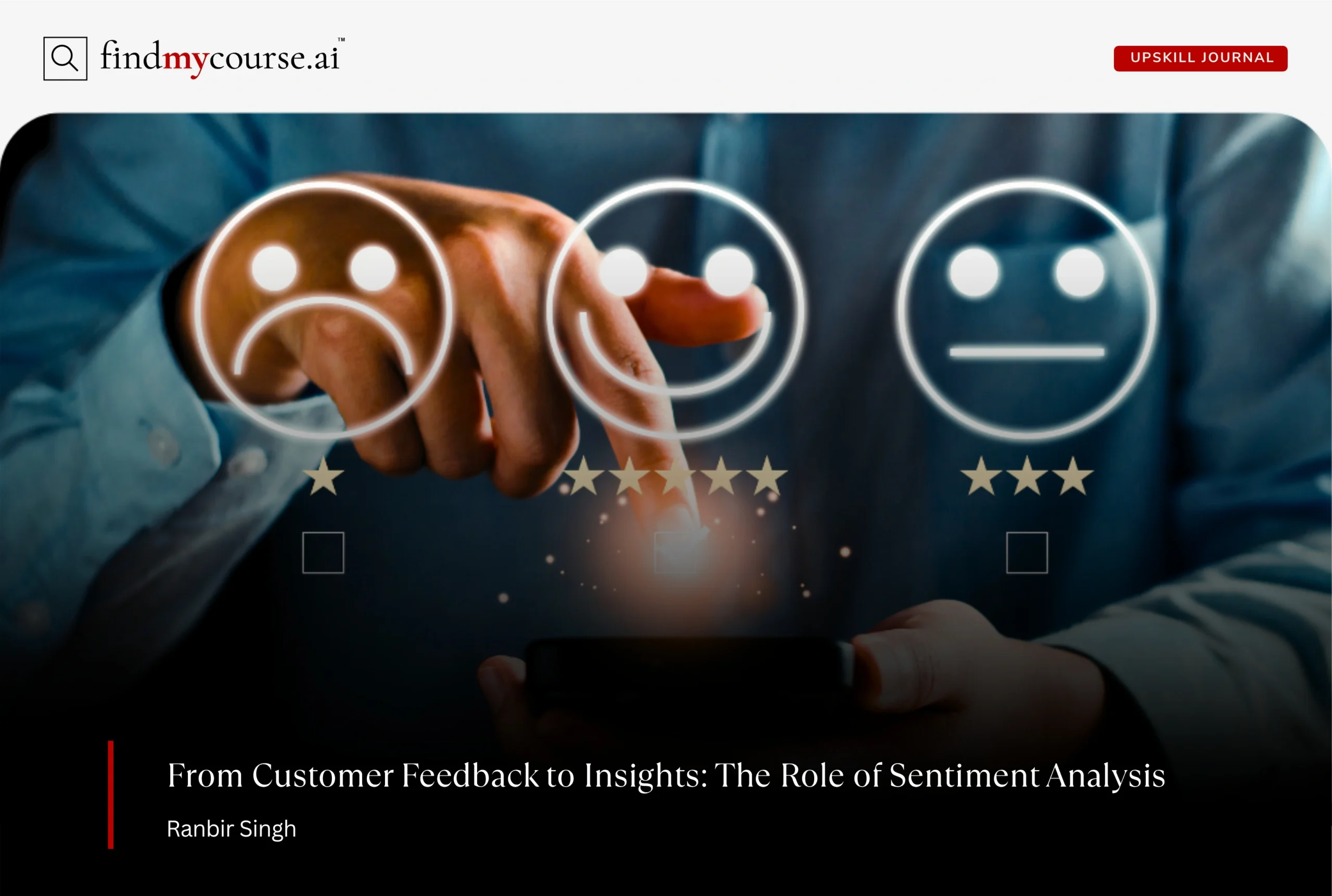
Sentiment analysis is a branch of natural language processing (NLP) that identifies, extracts, and quantifies emotional states and subjective information from text or voice data. Think of it as a digital mood ring for a brand. By using sophisticated algorithms, companies can determine if a piece of text is positive, negative, or neutral. As a result, they can gauge the public’s perception of a new product launch or a viral marketing campaign within seconds.
However, the technology has evolved significantly. In the past, software looked for simple keywords like “good” or “bad.” Today, the systems are much more nuanced. They can detect sarcasm, irony, and even the intensity of an emotion. For instance, if a customer says, “Oh great, another delay,” a human knows they are annoyed. Modern AI now understands this context too, ensuring accurate interpretation rather than misreading “great” as a compliment.
The Role of NLP for Sentiment Analysis
To understand the mechanics, we must look at NLP for sentiment analysis. Natural Language Processing acts as the bridge between human communication and computer understanding. By breaking down sentences into smaller parts, the AI can analyze the syntax and semantics of a message. This means the system can recognize that “The battery life is short” is a negative comment about a specific feature, even if the rest of the review is positive.
These systems also use deep learning models trained on billions of snippets of human conversation. This training allows the AI to understand cultural slang and regional dialects. As a result, a brand operating in London and one in Mumbai can both use the same core technology while still capturing local nuances in customer expression.
Common Sentiment Analysis Methods
When a company decides to implement this technology, they usually choose from three primary sentiment analysis methods. Each has its own distinct strengths depending on the volume of data and the specific strategic goals of the business. Choosing the right approach is not just a technical step—it directly shapes how well a company understands its customers.
- Rule-Based Systems: These rely on manually created rules and extensive lexicons (dictionaries of polarized words). For example, a company might create a list of “happy” words like excellent and “sad” words like broken. The system then counts these to provide a score. While easy to set up and highly transparent, they often struggle with complex sentences or sarcasm. They work best for businesses with predictable vocabularies.
- Automatic Systems: These use advanced machine learning techniques to process information. Rather than following strict human-coded rules, the system learns directly from data. By feeding the algorithm thousands of labeled examples, it eventually learns to classify new, unseen text. In 2026, these systems can process millions of reviews in real time. For instance, an e-commerce company might detect repeated complaints about “late delivery” in customer reviews and trace the issue to a specific logistics partner.
- Hybrid Systems: Most top-tier companies today use a combination of both approaches. They combine the high-speed processing of machine learning with the precision of human-defined rules. This allows the AI to handle large-scale analysis while rules refine results for brand-specific language. Hybrid systems are widely considered the gold standard for enterprise-level sentiment analysis.
Core Sentiment Analysis Tools in 2026
The market for sentiment analysis software has expanded rapidly. Businesses now prioritize platforms that offer real-time monitoring and seamless integration with customer relationship management (CRM) systems. These tools gather data from social media, emails, and review sites and present it in clear, actionable dashboards.
| Tool Type | Primary Function | Best For |
| Social Listening Platforms (e.g., Brandwatch, Sprout Social) | Monitor brand mentions across TikTok, X, and Reddit in real time | PR and brand awareness |
| Customer Feedback Software (e.g., Qualtrics, SurveyMonkey) | Analyze surveys, reviews, and support tickets for product insights | Product development |
| Specialized API Services (e.g., Google Cloud NLP, AWS Comprehend) | Enable developers to build custom sentiment models into apps | Tech startups |
| Enterprise Analytics (e.g., Tableau, Power BI with AI plugins) | Connect sentiment trends with sales and business performance | Large enterprises |
How Sentiment Analysis Works: A Step-by-Step Journey
To understand how raw, messy customer data transforms into a clear strategy, it helps to look at the process step by step. While the underlying models are complex, the workflow follows a structured pipeline:
- Data Collection: The process begins by gathering data from sources like TikTok comments, Reddit threads, support emails, and chat logs. This ensures companies always stay updated on ongoing conversations.
- Data Cleaning and Preparation: Human language is often messy, filled with emojis, slang, and errors. The system cleans and standardizes this data to improve accuracy.
- Text Processing (Tokenization & Parsing): The AI breaks text into smaller components called tokens and analyzes grammar and structure. This is where the foundation of NLP for sentiment analysis becomes critical.
- Feature Extraction: The system identifies key phrases and patterns that carry emotional weight. It also considers tone, punctuation, and context to detect subtle signals.
- Sentiment Classification: The AI assigns sentiment categories such as positive, negative, or neutral. More advanced systems may assign scores (e.g., -1 to +1) or detect emotions like frustration or loyalty.
- Analysis and Visualization: Results are displayed in dashboards showing trends, recurring issues, and campaign impact. As a result, executives can quickly interpret the data and take action.
Managing Brand Reputation in Real-Time
Public relations has changed dramatically because of sentiment analysis. In the past, a PR crisis might take days to fully emerge. Now, if negative sentiment spikes online, automated alerts notify teams instantly.
For example, if a new product launch triggers backlash on social media, companies can detect the surge in negative sentiment within minutes and respond quickly—sometimes before the issue reaches mainstream attention.
This proactive approach also enables direct engagement. If a user posts a frustrated message, an AI-powered bot (or a human alerted by the system) can respond with a solution almost immediately. In turn, this quick response often transforms a negative experience into a positive one.
Predictive Analytics: Foreseeing Customer Churn
One of the most powerful uses of this technology is predicting which customers are likely to leave. By monitoring the sentiment of a customer’s interactions over time, AI can detect patterns of declining satisfaction.
For instance, a customer whose messages shift from enthusiastic to neutral—and eventually negative—may be at risk of churn. Because of this, companies can intervene early with personalized offers or direct outreach.
Instead of trying to win back a lost customer, businesses can preserve the relationship before it breaks. This significantly reduces acquisition costs, since retaining an existing customer is far more cost-effective than finding a new one.
Challenges and Limitations of Sentiment Analysis
Despite major advances in 2026, accurately interpreting human emotion remains a complex challenge. While sentiment analysis systems are powerful, they still require human oversight to handle nuance, context, and ambiguity effectively.
- Sarcasm and Context: Sarcasm continues to be difficult for AI to interpret. A phrase like “Oh, another delay, how wonderful!” uses positive words but conveys frustration. Without full context, systems may misclassify such statements.
- Cultural Nuance and Slang: Language evolves rapidly, especially on platforms like TikTok and Reddit. Regional slang, cultural references, and informal expressions can vary widely, making it difficult for models to stay accurate without constant retraining.
- Mixed or Ambiguous Sentiment: Customers often express both positive and negative opinions in the same message. For example, a user might praise a product’s design but criticize its price. Simple scoring systems may label this as neutral, masking specific issues that need attention.
- Data Privacy and Ethics: Collecting and analyzing customer data at scale raises important privacy concerns. Companies must ensure that data is handled responsibly, with transparency and compliance with regulations.
Conclusion
As emotional data becomes increasingly central to business decision-making, sentiment analysis has evolved from a niche technical tool into a core pillar of modern strategy. It allows large organizations to operate with the attentiveness of a small business, responding to customer feedback in real time. Whether in marketing, engineering, or leadership, the ability to interpret the digital “mood” of an audience is a critical skill.
Ultimately, professionals who ignore sentiment don’t just miss feedback—they miss the future direction of their market. By embracing these tools, companies move beyond simply selling products and begin building genuine, lasting connections with the people they serve.
So, if you have any more queries or want to dive deeper into these digital strategies, just ask our AI assistant for personalized guidance.