Imagine walking onto a factory floor — but first, you explore the entire plant virtually, checking how every machine is humming, which parts need maintenance soon, and even running tests that would otherwise shut down production. This isn’t science fiction anymore. Through digital twin technology, organizations are rethinking the future of design, maintenance, and decision‑making.
Moreover, for professionals looking to upskill in 2026, understanding this transformation is becoming a career-defining move. In this article, we explore how AI and data science are powering digital twins and how you — as an aspiring data‑ or tech‑savvy pro — can ride this wave responsibly and strategically.
What is Digital Twin Technology
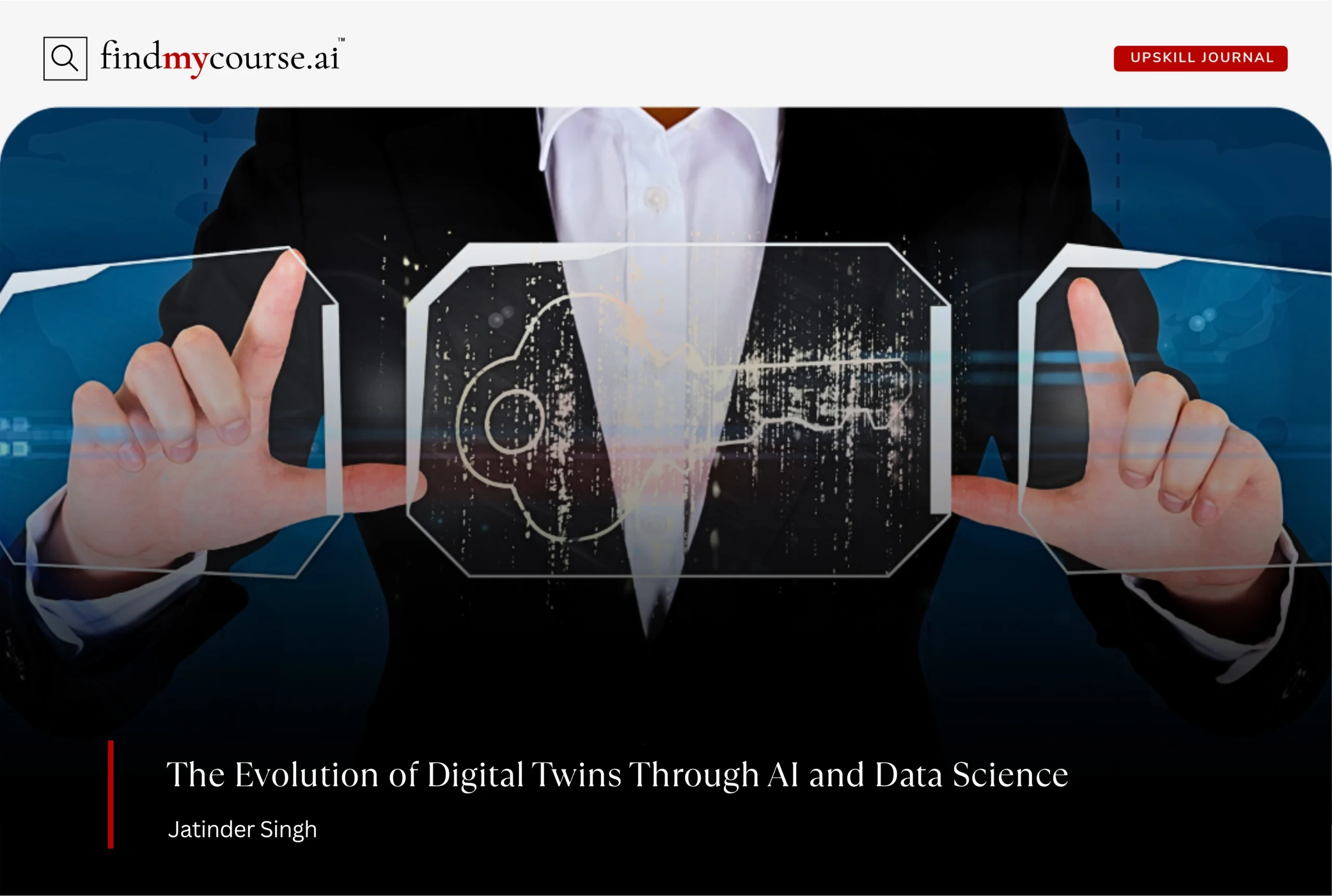
A digital twin is a virtual replica of a physical asset, process, or system. It mirrors real-world entities — a machine, a factory line, even an entire building or hospital — in a digital environment. As technology evolved, we moved from simple static models to dynamic, real-time, data-driven replicas that offer deep insights and predictive capabilities.
Digital twins come in different forms: component‑level twins (for individual machines or parts), system-level twins (for interconnected machines or workflows), and process‑level twins (for workflows, supply chains, or even entire operations). Industries such as manufacturing, healthcare, energy, smart buildings, and urban infrastructure are increasingly using them — a trend that is rapidly gaining momentum.
What was once a niche concept is now seeing broad adoption, thanks to advances in sensors, IoT, cloud infrastructure, and — most importantly — data science and AI.
The Role of Data Science in Digital Twins
Digital twins are more than static 3D models—they are dynamic systems that reflect real-world operations, and data science is what brings them to life. By collecting and analyzing data from sensors, machines, and day-to-day operations, organizations can gain actionable insights that drive smarter decisions and better efficiency. This data-driven approach supports several key capabilities:
- Predictive Maintenance: By studying historical and real-time data, digital twins can forecast equipment failures before they happen, reducing unplanned downtime and saving costs.
- Performance Optimization: Insights on usage, load, and environmental conditions help fine-tune operations, improving efficiency and minimizing waste.
- Anomaly Detection: Continuous monitoring catches unusual patterns early, whether it’s a malfunction, misuse, or cybersecurity threat.
- Trend Analysis & Forecasting: Long-term data helps anticipate future needs, allocate resources, and plan effectively.
- Scenario Planning: Data-driven simulations allow organizations to test “what-if” situations, reducing risks and enhancing operational resilience.
With these capabilities, data science turns digital twins into intelligent, proactive tools that keep operations smooth and organizations prepared for the future.
How AI Powers Digital Twins
AI takes digital twins far beyond data analysis by adding learning, prediction, and intelligent automation. While data science focuses on collecting and interpreting information, AI—especially machine learning and deep learning—gives digital twins the ability to recognize patterns, anticipate outcomes, and make decisions in real time. This intelligence shows up in several powerful ways:
- Predictive Insights: Machine learning models learn from historical and live data to forecast failures, inefficiencies, or emerging behavior before they surface.
- Handling Complex Data: Deep learning processes high-dimensional inputs such as dense sensor networks, medical signals, or environmental patterns, delivering higher accuracy and more resilient predictions.
- AI-Driven Simulation: Digital twins can run rapid “what-if” scenarios, helping teams test changes in load, workflow, or environmental conditions without touching the physical system—cutting risk and speeding design cycles.
- Real-Time Decision-Making: Connected with IoT and cloud systems, AI allows digital twins to trigger alerts, adjust operations, or recommend maintenance automatically, creating a smart feedback loop between physical and virtual worlds.
With these capabilities, AI transforms digital twins into proactive, intelligent assistants that optimize performance and reduce uncertainty.
Digital Twin Technology Use Cases across Industries
Across industries, digital twins are turning physical systems into dynamic virtual models. The table below highlights how companies are applying this technology, with AI and data science enhancing its capabilities.
| Sector | Real-World Use Cases | AI & Data Science Role | Benefits / Outcomes |
| Manufacturing | 1. GE uses digital twins to predict jet engine maintenance needs. 2. Siemens simulates factory workflows to optimize production. 3. Unilever optimizes energy use and processes. | – AI predicts failures and optimizes workflow. – Data science analyzes historical metrics and machine data. | Reduced downtime, higher throughput, lower costs, faster time-to-market. |
| Healthcare | 1. Philips models patient physiology to test treatment plans. 2. GE Healthcare simulates medical device performance. | – AI predicts patient outcomes and detects anomalies. – Data science integrates patient histories. | Personalized care, reduced clinical risk, earlier intervention, more accurate diagnosis. |
| Smart Cities & Infrastructure | 1. Virtual Singapore simulates traffic, energy grids, and environmental planning for urban optimization. | – AI forecasts demand and traffic. – Data science identifies inefficiencies and resource patterns. | Efficient city operations, reduced waste, stronger sustainability, improved resilience. |
| Automotive & Aerospace | 1. Tesla simulates vehicle systems and battery performance. 2. BMW builds virtual factories to optimize assembly lines. | – AI models performance and mechanical behavior. – Data science analyzes logs and wear patterns. | Faster innovation cycles, safer designs, optimized maintenance, lower R&D costs. |
| Energy & Utilities | 1. Siemens Energy monitors turbines and grid infrastructure. 2. Akselos simulates pipelines and offshore rigs for reliability. | – AI predicts failures and load fluctuations. – Data science evaluates historical and environmental data. | Improved grid reliability, fewer outages, better renewable integration, higher efficiency. |
Challenges and Considerations
Even though digital twins offer huge potential, their implementation requires careful planning and attention to data, integration, and security. Several practical challenges can slow adoption, especially when AI and data science are involved.
- Data Quality & Availability: A digital twin is only as good as the data feeding it. If sensors are poorly calibrated, data is missing, or logs are inconsistent, the whole system suffers. Older machines without IoT capabilities add another layer of difficulty, often requiring costly retrofits.
- Integration Complexity: To build a functional digital twin, many pieces must work together—physical equipment, IoT networks, cloud platforms, analytics tools, and AI models. Coordinating all this takes expertise that many teams don’t yet have. The shortage of people who understand both domain operations and advanced analytics can become a major bottleneck.
- Security, Privacy & Ethics: Because digital twins use real-time operational or personal data, protecting that information is critical. Breaches, misuse, or unclear ownership can create serious risks, especially in healthcare or smart cities.
- Computational Demands & Cost: High-fidelity simulations require strong computing power and storage. Combined with upfront investments in sensors and infrastructure, the overall cost can be challenging—particularly for smaller organizations.
Conclusion
Digital twin technology, powered by AI and data science, is transforming the way industries design, operate, and innovate. From safer, smarter factories to personalized healthcare, and from sustainable urban planning to efficient energy systems, the possibilities are vast.
Yes, challenges exist but for those willing to learn, adapt, and invest thoughtfully, the rewards are tremendous. Digital twins are far more than a tech trend; they are quickly becoming a foundation for the next wave of industrial transformation. For anyone exploring a career in data science, AI, IoT, or technology-driven industry solutions, embracing digital twin technology is a smart, future-proof move.
In short, understanding and leveraging digital twins today doesn’t just help you keep pace — it positions you to lead in the industries of tomorrow.