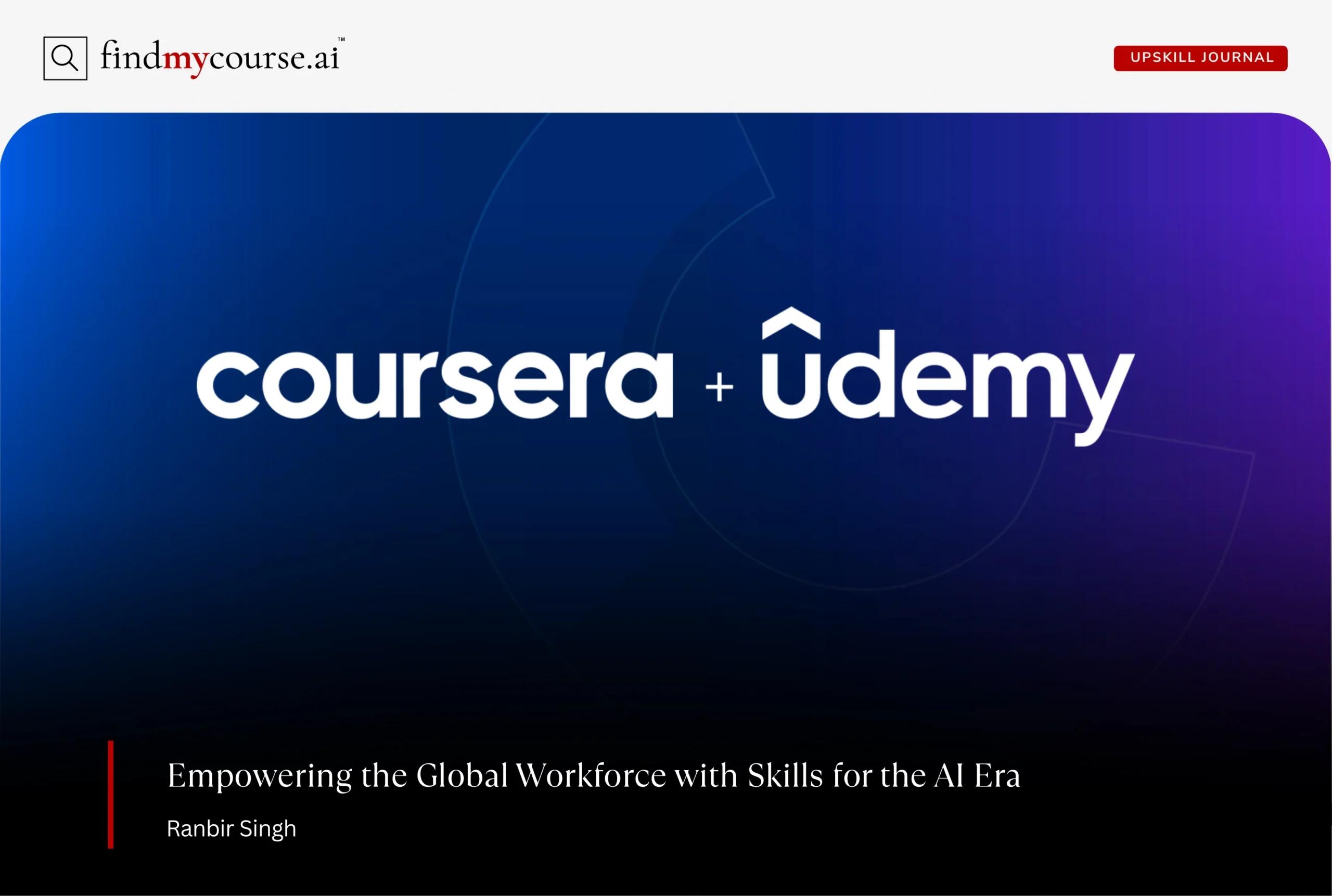
When Coursera and Udemy announced plans to combine, it wasn’t just another tech merger headline. It was a signal.
A signal that the way we learn, upskill, and stay relevant in the age of AI is changing fast — and also that the platforms shaping this future are racing to keep up.
On paper, the move makes sense. Coursera brings world-class universities and recognized credentials. Udemy brings speed, flexibility, and a marketplace that reacts to industry trends almost in real time. Together, they want to become the place where learning moves as fast as technology.
But big ideas always come with big tradeoffs. Let’s talk about what this really means — beyond the press release.
Why the Coursera and Udemy Merger Feels Inevitable
AI isn’t just creating new jobs — it’s constantly rewriting existing ones. Skills that were relevant two years ago can feel outdated today. Traditional education can’t move that fast. And most standalone platforms can’t cover everything learners need anymore.
Coursera and Udemy represent two sides of the same learning problem:
- Structure vs. speed
- Credentials vs. practicality
- Long-term learning vs. just-in-time skills
Combining them is a bet that learners don’t want to choose anymore. They want both.
The Real Upside: What Could Go Right
1. Learning That Actually Matches How People Grow
Most people don’t learn in straight lines. We jump between curiosity, urgency, and career pressure. A combined platform could finally support that reality — from quick skill fixes to deep, credentialed mastery — without forcing learners to switch ecosystems.
That’s a powerful shift.
2. AI That Helps — Not Just Hypes
Both platforms have invested heavily in AI, but together they could move beyond recommendations and into real guidance:
- What should I learn next?
- Which skills actually matter for my role?
- How do I prove what I know — not just watch videos?
If done right, this could turn online learning from passive consumption into active career navigation.
3. A Serious Win for Enterprises
Companies are overwhelmed. They know their workforce needs reskilling, but they struggle to:
- Identify skill gaps
- Measure progress
- Connect learning to business outcomes
A unified platform with better data, better content, and better AI could finally make corporate learning feel less like a checkbox and more like a strategy.
The Tension Beneath the Surface
Here’s where things get complicated.
1. Scale Can Kill Soul
Udemy’s strength has always been its openness — anyone with expertise could teach. Coursera’s strength has been trust and rigor. Merging those philosophies isn’t easy.
If everything becomes more polished, reviewed, and standardized, we risk losing the raw, fast, practical knowledge that made Udemy powerful in the first place.
2. Instructors Are Watching Closely
Instructors are the heartbeat of any learning platform. Changes to visibility, revenue models, or content rules can quickly erode trust.
The big question:
Will instructors feel empowered — or managed?
The answer may determine whether this platform thrives or quietly loses its creative edge.
3. Less Competition Isn’t Always Better
Consolidation can bring efficiency, but it can also reduce pressure to innovate. If fewer major players control learning at scale, learners may see:
- Fewer pricing options
- Slower experimentation
- More “safe” content
Innovation often comes from friction. Removing too much of it has consequences.
The Bigger Picture: This Isn’t Just About Courses
Coursera and Udemy Merger isn’t really about videos, certificates, or platforms.
It’s about who controls the map to the future of work.
Moreover, as AI accelerates, learning platforms are becoming career infrastructure. They influence:
- Which skills are valued
- Who gets access to opportunity
- How quickly people can adapt to change
So that’s an enormous responsibility.
Final Thought: A Turning Point, Not a Finish Line
The Coursera and Udemy combination could redefine online learning for the AI era — or it could become a cautionary tale about what happens when scale outpaces trust.
If they:
- Keep learning accessible
- Respect instructors
- Use AI thoughtfully
- And stay learner-first
This could be a once-in-a-generation leap forward.
If not, learners will move on — because in today’s world, the ability to adapt is the only real credential that matters.
And ironically, that’s the very lesson this merger will need to prove it understands.