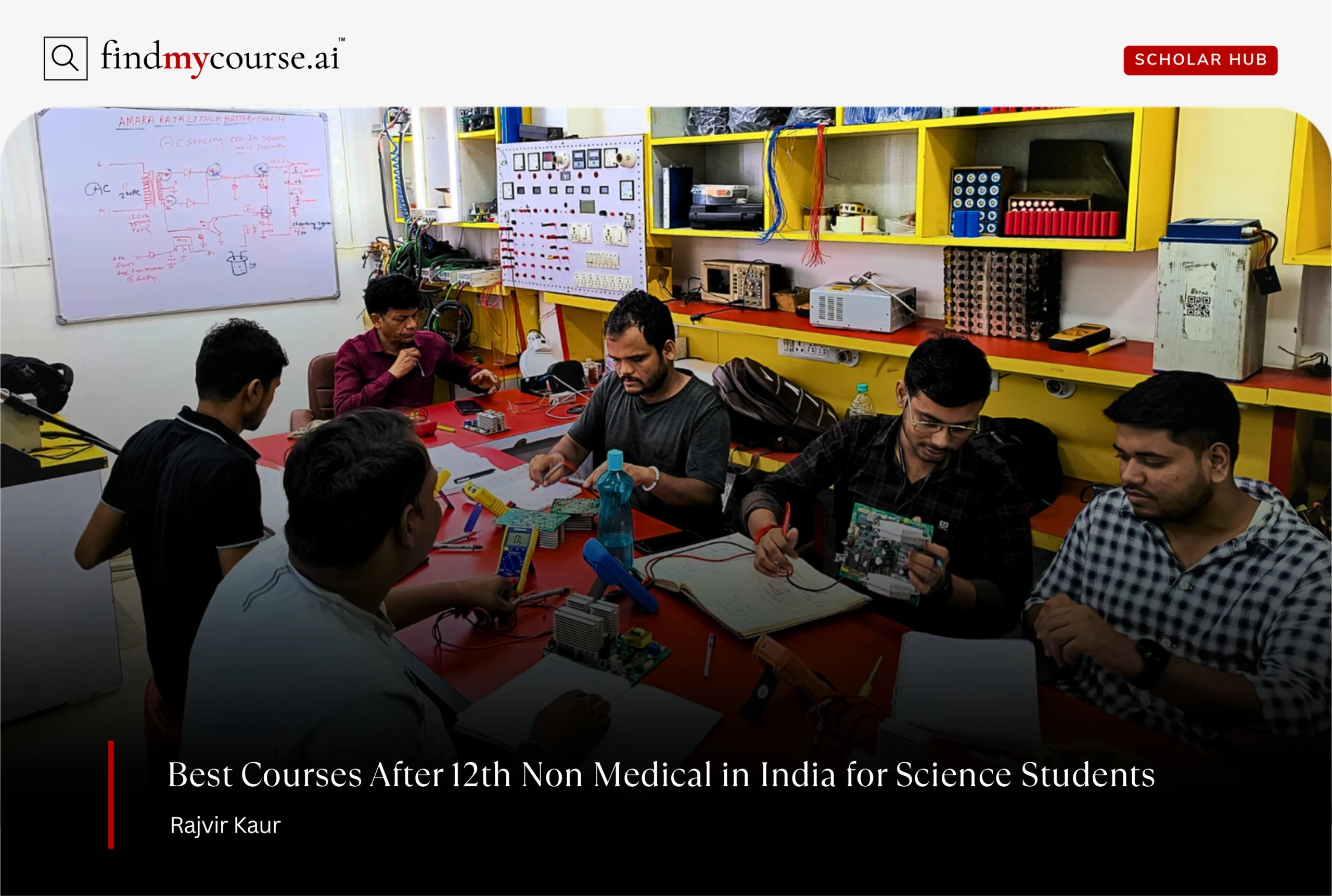
You’ve just finished 12th grade in the non-medical stream, and suddenly, the world seems full of possibilities — and pressures. Engineering, IT, data science, design, or something entirely different? The choices can feel overwhelming, and a single decision here could shape your career for the next decade. And, this is where understanding the landscape of courses after 12th non medical becomes critical.
Moreover, in India’s rapidly evolving higher education ecosystem, the options are no longer limited to traditional paths like engineering or B.Sc; new-age courses are emerging in AI, data analytics, and applied sciences. Whether you’re a tech enthusiast, a research-minded student, or a creative thinker, this guide will help you navigate your academic pathways wisely and confidently.
What is the Non-Medical Stream?
The non-medical stream primarily includes Physics, Chemistry, Mathematics, and sometimes Computer Science. Unlike medical students who focus on biology and healthcare, non-medical students also have a strong foundation in analytical reasoning, problem-solving, and quantitative skills. These subjects prepare students for careers in engineering, technology, research, and applied sciences. Moreover, non-medical students often explore interdisciplinary fields such as data science, artificial intelligence, and design technologies. Knowing this difference is important for choosing the right courses after 12th non medical that match your skills and interests. Parents, educators, and students themselves can also use this knowledge to align academic pathways with individual strengths and career aspirations.
Popular Graduation Courses after 12th Non Medical
Engineering Courses (B.Tech / BE)
Engineering remains one of the most sought-after paths for non-medical students. B.Tech and BE programs cover specializations such as:
| Specialization | Course Overview | Career Prospects | Popular Entrance Exams |
| Computer Science & AI | Focuses on programming, algorithms, and artificial intelligence applications. | Software Developer, AI Engineer | JEE Main, JEE Advanced, BITSAT |
| Mechanical Engineering | Deals with mechanics, thermodynamics, and designing machines. | Design Engineer, Robotics Specialist | JEE Main, VITEEE |
| Civil Engineering | Covers construction, structural design, and urban infrastructure planning. | Structural Engineer, Urban Planner | JEE Main, State CETs |
| Electrical Engineering | Involves power systems, electronics, and automation technologies. | Power Systems Engineer, Automation Expert | JEE Main, JEE Advanced |
These programs develop strong problem-solving and technical skills. Moreover, with India’s growing focus on AI, renewable energy, and infrastructure, engineering graduates enjoy high employability and diverse career opportunities. Students should consider their interests, aptitude, and long-term goals before selecting a specialization.
Pure Science Courses (B.Sc)
For students who enjoy exploring the fundamentals of science and conducting experiments, B.Sc courses provide a solid foundation. Popular programs include Physics, Chemistry, Mathematics, Biotechnology, and Statistics. These courses not only prepare students for research and teaching but also develop analytical and problem-solving skills, opening doors to diverse academic and professional pathways.
Career opportunities:
- Laboratory Scientist
- Research Analyst
- Academic Lecturer
Pursuing a B.Sc also allows progression to M.Sc or PhD programs, opening doors to academia, scientific research institutes, and innovative technology development. In addition, interdisciplinary programs like Data Analytics or Computational Science blend scientific knowledge with practical skills, making graduates more competitive in the global job market.
Computer & IT Courses After 12th Non Medical
With India’s digital economy expanding rapidly, computer and IT courses have become highly sought-after. These programs teach students essential skills in programming, software development, cybersecurity, and data analytics, preparing them for tech-driven careers. Options include:
- BCA (Bachelor of Computer Applications)
- B.Sc in IT
- Bachelor in Cybersecurity
- Data Science & AI programs
Graduates can pursue careers as software developers, cybersecurity analysts, AI specialists, or data scientists. Moreover, these courses often offer project-based learning and internships, helping students build practical skills early in their careers.
Other Popular Courses After 12th Non Medical
For students with creative or niche interests, several non-traditional courses offer exciting alternatives beyond standard science and engineering streams. These programs combine practical skills with industry-focused training to prepare students for dynamic careers.
| Course | Popular Courses | Career Prospects |
| Architecture (B.Arch) | B.Arch, Bachelor of Urban Planning | Architect, Urban Planner |
| Design & Animation | B.Des (Design), BFA in Animation | Animator, UX Designer |
| Hotel Management | BHM (Hotel Management), Diploma in Hospitality | Hotel Manager, Event Planner |
| Aviation & Pilot Training | B.Sc Aviation, Commercial Pilot Training | Pilot, Air Traffic Controller |
These courses equip students with hands-on skills, industry exposure, and career flexibility. Choosing the right program allows non-medical students to explore their passions while building professional competence.
Diploma & Short-Term Courses after 12th Non Medical
For students seeking practical skills and a faster route to employment, diploma and certificate programs are also an excellent option. These courses focus on hands-on learning, industry-relevant knowledge, and skill development, allowing non-medical students to gain a competitive edge early in their careers.
| Course Type | Popular Courses | Duration | Career Outcomes |
| Polytechnic Diplomas | Diploma in Mechanical, Diploma in Civil | 1–3 years | Junior Engineer, Technician |
| IT Certifications | Python, Web Development | 6–12 months | Python Developer, Data Analyst |
| Robotics & Automation | Robotics Engineering, Mechatronics | 1 year | Robotics Technician, Programmer |
| Digital & Data Analytics | Data Analytics, AI & ML | 6–12 months | Data Analyst, AI Assistant |
These courses are cost-effective and industry-aligned, making them ideal for students looking to gain early work experience. They complement traditional degrees, enhance employability, and help students explore niche technical fields while building a strong practical foundation..
Career Options Without Engineering
Not every non-medical student wishes to pursue an engineering degree. Fortunately, there are several alternative career paths that leverage analytical, mathematical, and problem-solving skills. These options allow students to explore diverse industries and align with their individual strengths and interests.
| Pathway | Popular Courses / Exams | Career Outcomes |
| Government Jobs | SSC, Banking Exams, Railways | Clerks, Officers, Administrative Roles |
| Research Roles | B.Sc, M.Sc, Research Internships | Scientist, Lab Technician, Research Analyst |
| Entrepreneurship & Startups | Business & Tech Courses, Incubators | Startup Founder, AI/Analytics Specialist |
These pathways highlight the versatility of non-medical students. By combining a strong foundation in mathematics and science with certifications or skill-based programs, graduates can remain competitive, explore innovative fields, and create impactful careers beyond traditional engineering routes.
How to Choose the Right Course
With so many options in engineering, IT, sciences, and creative fields, making an informed decision is crucial for shaping your future. Deciding among the top courses after 12th non medical requires thoughtful planning and a solid grasp of your strengths, interests, and long-term career aspirations.
- Identify Strengths & Interests: Consider your aptitude in subjects like mathematics, coding, physics, or design. Understanding what excites you will make studying more enjoyable and effective.
- Evaluate Career Scope: Research job demand, industry growth, and salary potential for each course. Choosing programs with strong future prospects ensures better employability.
- Consider Duration & Costs: Compare degrees and diplomas, factoring in tuition fees, living expenses, and the time commitment required. Shorter courses may offer faster entry into the workforce, while longer programs provide deeper specialization.
- Seek Guidance: Career counselors or online platforms like ScholarHub can help map out suitable academic pathways and explore diverse options.
Ultimately, balancing passion with practicality is key. Selecting courses aligned with your skills and interests not only boosts motivation but also ensures stronger performance and long-term career satisfaction.
Final Thoughts
From engineering streams to data science, design, or short-term diplomas, the landscape of courses after 12th non medical is vast—and that’s precisely what makes it exciting. Each path offers a unique set of skills, experiences, and potential career doors, whether it’s coding your first software project, conducting lab research, or designing a creative portfolio.
The key isn’t picking the perfect course, but understanding which courses align with your strengths, curiosity, and the kind of work you see yourself doing. Therefore, think of this stage as exploration: the experiences, projects, and learning you gain now will shape your future more than any single choice.