Law is not just a profession; it’s a way to shape society and stand up for justice. Every year, thousands of students in India dream of becoming lawyers, judges, or corporate legal experts. While National Law Universities (NLUs) are often in the spotlight, private law colleges have emerged as excellent alternatives, offering modern infrastructure, quality faculty, and career-focused programs. In this guide, we’ll explore the top private law colleges in India, their courses, admission process, and also tips to help you choose the right one for your career.
Why Consider Private Law Colleges?
Many students wonder whether private law colleges can match the quality of NLUs. The truth is, these institutions have grown tremendously in the last decade. Here’s why you should consider them:
- Modern Curriculum: Private colleges often design courses in consultation with industry experts, keeping the syllabus relevant.
- Better Infrastructure: State-of-the-art classrooms, moot court facilities, libraries, and hostels make learning more effective.
- Internship & Placement Opportunities: Many private law colleges collaborate with law firms, corporates, and NGOs, giving students practical exposure.
- Flexible Admissions: While NLUs mostly rely on CLAT scores, private colleges accept CLAT, LSAT India, or their own entrance exams.
Choosing the right college is not just about rankings—it’s about finding the best fit for your career and interests.
Top 10 Private Law Colleges in India – Detailed List
If you’re planning a career in law, knowing which private colleges offer the best programs and opportunities can make all the difference. Here’s a look at some of the top private law colleges in India, along with what makes them stand out:
1. Symbiosis Law School (SLS), Pune
Founded in 1977, Symbiosis Law School, Pune, is one of India’s most prestigious private law schools. It offers BA LLB, BBA LLB, and LLM programs, with admissions primarily through SLAT (Symbiosis Law Admission Test). The school is renowned for its strong corporate law focus and vibrant moot court culture. Students also benefit from international collaborations and internship opportunities at top law firms and multinational companies. The campus emphasizes holistic development through legal aid clinics, seminars, and active student-run law societies.
2. Jindal Global Law School (JGLS), Sonipat
Established in 2009 as part of O.P. Jindal Global University, JGLS offers BA LLB, BBA LLB, and LLM courses, with admissions via LSAT India. The school is known for its global exposure, international faculty, and research-oriented programs. Students actively participate in national and international moot courts while gaining valuable internship experience at leading law firms and corporate organizations. JGLS also offers exchange programs with universities abroad, providing a unique global perspective to its students.
3. Siksha ‘O’ Anusandhan (SOA), Bhubaneswar
SOA School of Law, founded in 2007, offers BA LLB and BBA LLB courses, with admissions through SAAT or CLAT scores. Over the years, it has gained regional prominence due to its modern curriculum and emphasis on practical legal training. Students engage in moot court competitions, research initiatives, and internships, preparing them for both litigation and corporate law careers. The campus also encourages student participation in legal aid clinics and other extra-curricular programs, ensuring well-rounded development.
4. KIIT School of Law, Bhubaneswar
Part of KIIT University and established in 2007, KIIT School of Law offers BA LLB, BBA LLB, and LLM programs, with admissions via KIITEE or CLAT. The school focuses on interdisciplinary legal education, combining rigorous academics with practical exposure through moot courts, internships, and research projects. Collaborations with national and international universities further enhance the learning experience. Students also benefit from a vibrant campus life, participating in legal societies and community service initiatives.
5. UPES School of Law, Dehradun
Founded in 2003, UPES School of Law offers BA LLB, BBA LLB, and specialized LLM programs in corporate, energy, and intellectual property law. Admissions are based on ULSAT, CLAT, or LSAT India scores. The school emphasizes industry-oriented learning, providing students with internships at law firms, corporate organizations, and NGOs. With modern infrastructure, moot courts, and legal aid clinics, UPES ensures students are well-prepared for both professional practice and academic growth.
6. SASTRA Deemed University, Thanjavur
SASTRA School of Law, established in 2005, offers BA LLB and LLM courses, with admissions requiring CLAT scores plus 12th Board merit. The college is recognized for integrating legal education with research and technology, equipping students with a strong foundation in corporate, criminal, and constitutional law. Additionally, moot courts, internships, and legal aid clinics form an integral part of the learning experience. SASTRA also encourages student participation in seminars and workshops to support holistic development.
7. Saveetha Institute of Medical and Technical Sciences, Chennai
Founded in 2009, Saveetha School of Law offers BA LLB and LLM programs, with admissions through SLAT (Saveetha Law Admission Test). The school focuses on practical legal training, corporate law, and litigation skills. Students also gain experience through internships at law firms and NGOs, and they actively participate in moot court competitions. The campus emphasizes modern teaching methods, research opportunities, and extra-curricular development to ensure students are prepared for diverse legal careers.
8. Alliance School of Law, Bengaluru
Alliance University’s School of Law, established in 2010, offers BA LLB, BBA LLB, and LLM programs, with admissions via ACLAT, CLAT, or LSAT India. Known for its strong corporate law curriculum, the school encourages students to engage in moot courts, internships, and research projects. Practical training, ethical legal practice, and leadership development are core to the learning experience. Its modern campus provides a vibrant academic and cultural environment for students to thrive.
9. Christ University (School of Law), Bengaluru
Part of Christ University (established 1969, Law School in 2002), Christ University School of Law offers BA LLB and LLM courses, with admissions through the Christ University Entrance Test (CUET). The school emphasizes holistic student development, strong placement support, and active participation in moot courts and internships. Students benefit from experienced faculty, modern infrastructure, and an international outlook, preparing them for careers in litigation, corporate law, or research.
10. ILS Law College, Pune
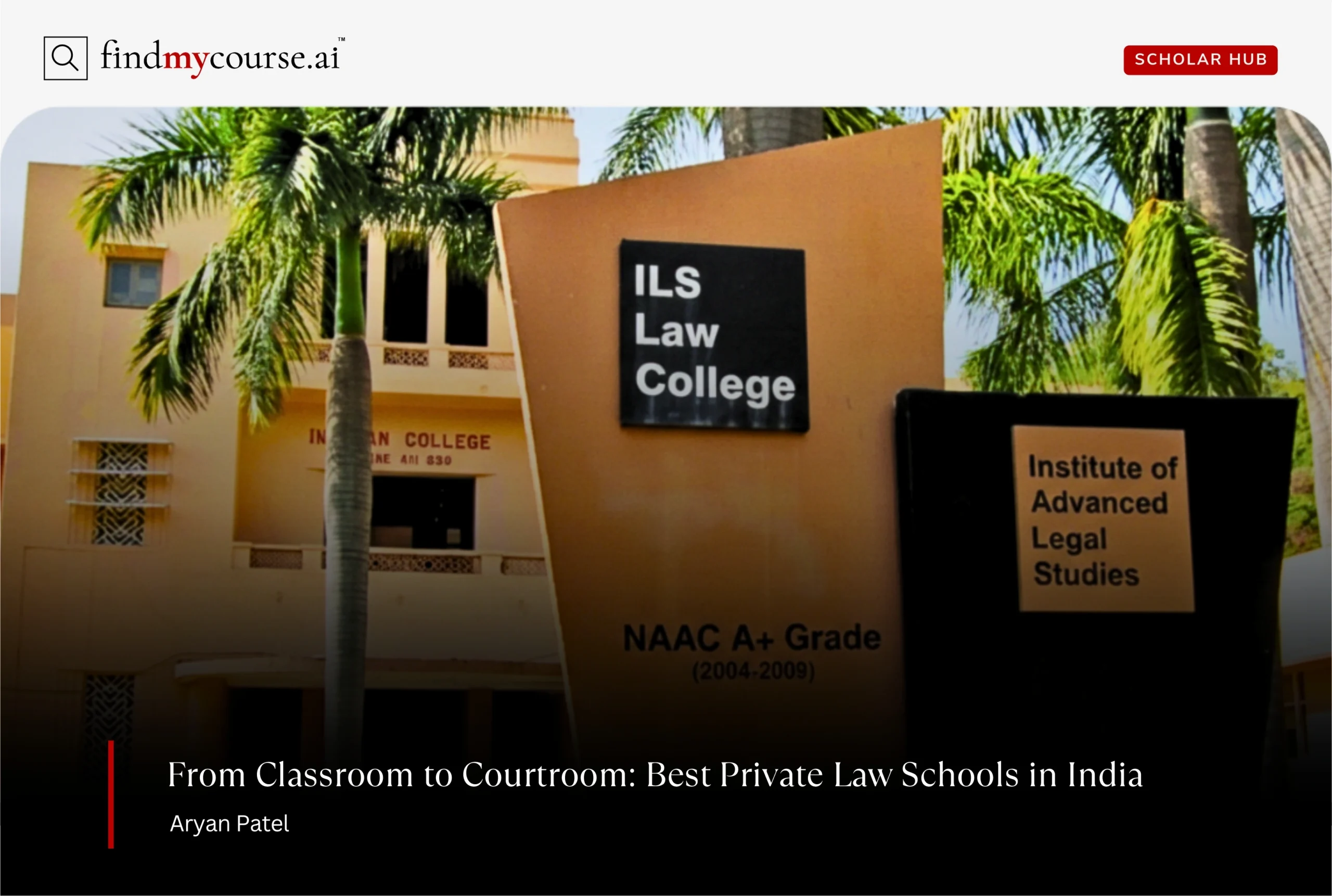
Founded in 1924, ILS Law College is one of India’s oldest private law institutions, offering LLB and LLM programs. Admissions are through MH-CET Law. The college boasts a strong alumni network, active moot court culture, and well-established industry connections. ILS combines traditional legal education with modern practical training, including internships, legal aid clinics, and research opportunities. Its long-standing reputation and focus on student success make it a preferred choice for aspiring lawyers in Maharashtra.
At a Glance: Fees and Placements of Top Private Law Colleges in India
Choosing the right law college is a crucial step in shaping your legal career, and understanding fees and placements can make this decision much easier. Here’s a quick snapshot of tuition costs and average placement packages for some of the top private law colleges in India.
| College Name | Total Tuition Fees | Average Placement (LPA) |
| SLS, Pune | ₹25.30 Lakhs | ₹12.0 – ₹13.3 LPA |
| JGLS, Sonipat | ₹32.50 Lakhs | ₹10.0 – ₹12.0 LPA |
| SOA, Bhubaneswar | ₹8.50 Lakhs | ₹4.0 – ₹5.4 LPA |
| KIIT, Bhubaneswar | ₹19.95 Lakhs | ₹4.5 – ₹5.5 LPA |
| UPES, Dehradun | ₹13.34 Lakhs | ₹6.5 – ₹8.2 LPA |
| SASTRA, Thanjavur | ₹7.00 Lakhs | ₹5.5 – ₹5.6 LPA |
| Saveetha (SIMATS) | ₹13.75 Lakhs | ₹4.0 – ₹4.5 LPA |
| Alliance, Bengaluru | ₹15.00 Lakhs | ₹8.5 LPA |
| Christ University | ₹14.23 Lakhs | ₹6.0 – ₹7.0 LPA |
| ILS Law College | ₹1.89 Lakhs | ₹8.0 – ₹10.0 LPA |
Admission Process for Top Private Law Colleges in India
Getting into a private law college in India is generally more flexible than NLUs, but it still requires careful planning. Here’s what you need to know:
- Entrance Exams: Most colleges accept CLAT, LSAT India, or their own entrance tests. Some may also consider merit-based admissions.
- Eligibility: 10+2 with minimum 50–60% marks in any stream. Some colleges have age limits.
- Counselling / Interview:
Many colleges conduct personal interviews, group discussions, or counselling sessions after entrance exam results. This stage evaluates your communication skills, legal aptitude, and overall fit for the program. - Application Tips:
- Start early and check college websites for deadlines.
- Prepare for entrance exams with basic legal aptitude, English, and reasoning.
- Keep documents like mark sheets, ID proofs, and recommendation letters ready.
Pro Tip: Some colleges also offer scholarships for merit and sports achievements, so don’t miss applying for those.
Career Paths after Graduating from Law Colleges
Graduating from a top private law college opens up a world of diverse opportunities in law, business, governance, and research. From corporate boardrooms to courtrooms and policy think tanks, there are multiple avenues to build a rewarding legal career:
| Career Path | Description | Key Employers / Sectors | Skills Required |
| Corporate Law | Work with corporations or law firms handling contracts, mergers, and compliance. | Top law firms, multinational companies, in-house legal teams | Contract drafting, negotiation, corporate governance |
| Litigation | Represent clients in civil or criminal courts. | Private practice, civil & criminal courts | Advocacy, research, courtroom procedure |
| Compliance & Governance | Ensure legal compliance and risk management for organizations. | Banks, corporates, consultancies, regulatory bodies | Regulatory knowledge, attention to detail, risk assessment |
| Public Policy & NGOs | Work on social issues, policy reforms, and legal advocacy. | NGOs, think tanks, government agencies | Policy analysis, legal research, communication |
| Higher Studies | Specialize through LLM, PhD, or international courses. | Universities, research institutes | Legal research, writing, analytical skills |
Moreover, internships and networking are crucial, and most private law colleges have dedicated placement cells to assist students.
Conclusion
From Symbiosis Law School in Pune to ILS Law College in Pune, the top private law colleges in India offer a mix of rigorous academics, practical training, and strong placement opportunities. Each college has its unique strengths — whether it’s corporate law exposure, litigation experience, or specialized research programs — giving students multiple pathways to launch a successful legal career.
By comparing fees, placements, entrance requirements, and campus opportunities, you can choose the college that best fits your goals, setting the foundation for a rewarding academic journey in the legal field.


One thought on “Future Lawyers’ Guide to Top Private Law Colleges in India”
Comments are closed.